Sirhind Fateh Divas: Amit Shah pays tribute to Sikh warrior Baba Banda Singh Bahadur who defied Mughal rule
Total Views |


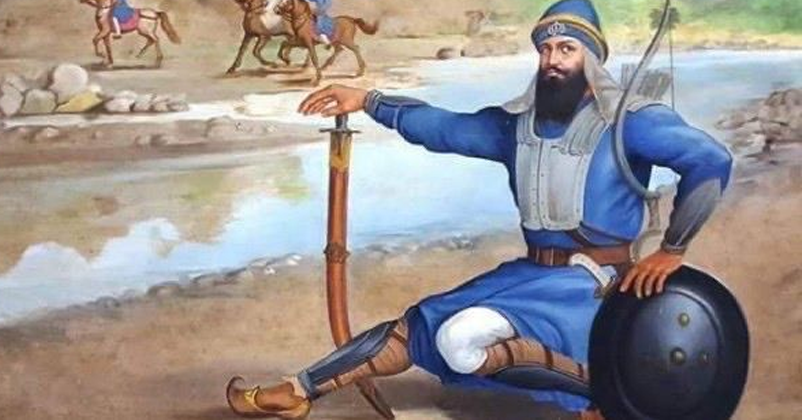
On the occasion of Sirhind Fateh Divas, Union Home Minister Amit Shah paid tribute to Baba Banda Singh Bahadur Ji and praised his courage, devotion to faith, and dedication towards the nation.
In a post on X, Amit Shah said,
“Heartfelt congratulations on the auspicious occasion of Baba Banda Singh Bahadur Ji's 'Sirhind Fateh Divas', the embodiment of unwavering devotion to faith, complete dedication to the motherland, and extraordinary courage against injustice. Baba Banda Singh Bahadur Ji was an ascetic at heart and an invincible warrior for the defense of faith. He organized the farmers and led the struggle against injustice, defeated the Mughals, and gave an immortal message of self-respect, courage, and the protection of faith. Despite enduring countless cruelties, he did not accept religious conversion. His life will forever remain a source of inspiration for the protection of the nation and faith.”
Banda Singh Bahadur, also known as Banda Bahadur, was a Sikh military commander and leader who played a significant role in the early 18th century. He led the Sikh Khalsa army in a series of campaigns against the Mughal Empire in the Punjab region. Banda Singh Bahadur is remembered for his efforts to establish a Sikh state in the region and for his commitment to Sikh principles. His rule, however, was short-lived, and he was eventually captured and executed by the Mughals in 1716. He remains a revered figure in Sikh history for his bravery and devotion to Sikhism.
His Early Life
Banda Singh Bahadur was born in the Rajouri district of Jammu and Kashmir, India. At the time of his birth in 1670, this region was under the control of the Mughal Empire. Banda Singh Bahadur’s birth name was Lachhman Dev, a Hindu Rajput who later adopted Sikhism. He adopted the name Banda Singh Bahadur after becoming a prominent figure in Sikh history. In his memory, a historical gurudwara has also been built at his birthplace in Rajouri.
He left his house at the age of 15 and became a disciple of Bairagi Janki Parsad, who later took him to Punjab and renamed him as Madho Das Bairagi. He later shifted to Nashik and then Nanded, where he erected a small cottage and took to a life of austerities. He also built a hut to meditate upon God. But his life took a dramatic turn when he became a follower of Guru Gobind Singh (the tenth Sikh Guru).
Inspired by the Guru’s teachings and the persecution of Sikhs under Mughal rule, he took on the name Banda Singh Bahadur and became a prominent leader in the Sikh community.
In September 1708, Guru Gobind Singh conferred the title of Bahadur on Madho Das and made him his deputy with full political and military authority. He also provided him with an advisory council of five Khalsas and 25 soldiers as bodyguards.
Defending Sikhs from Mughal Persecution
In 1708, after the death of Guru Gobind Singh, Banda Singh Bahadur assumed the role of a military commander and continued the struggle for Sikh rights and religious freedom. He and his followers waged a series of successful campaigns against the Mughal authorities and local landlords, establishing a Sikh state in the Punjab region. Banda Singh Bahadur was known for his progressive policies, which included the abolition of the zamindari system and land reforms for the benefit of common people.
His Battles
Battle of Samana (1709):
This early battle marked the beginning of Banda Singh Bahadur’s military campaign against the Mughals. While it ended inconclusively, it laid the foundation for later victories.
Battle of Sirhind (1710):
The Battle of Sirhind was one of the most significant battles led by Banda Singh Bahadur. His Sikh forces besieged the Mughal-controlled city of Sirhind. After a fierce battle and prolonged siege, Banda Singh Bahadur emerged victorious and captured the city on 14 May 1910. This victory became a major turning point in the Sikh-Mughal conflict and marked an important chapter in Sikh history.
Battle of Chappar Chiri (1710):
Banda Singh Bahadur won a decisive victory against the Mughals at Chappar Chiri near present-day Mohali in Punjab. This battle played a major role in establishing Sikh authority in the region.
Battle of Sadhaura (1710):
He defeated Mughal forces at Sadhaura, strengthening Sikh control over parts of Punjab and Haryana.
Battle of Sonepat (1710):
In this battle too, Banda Singh Bahadur’s forces defeated the Mughals and expanded their territorial control.
However, his rule faced major challenges due to the power of the Mughal Empire. In 1710, the Mughals launched a massive offensive against his forces, leading to a brutal siege of his fort in Gurdas Nangal.
Religious Freedom and Popular Uprising
Banda Singh Bahadur upheld Sikh principles and ensured religious freedom for Sikhs during his rule. His leadership promoted Sikh values and inspired the Sikh community to unite and stand against oppression and injustice.
Brutal Execution
Banda Singh Bahadur’s execution by the Mughals was one of the most tragic events in Sikh history. After his capture in 1716, he and his companions were subjected to severe torture. The Mughal rulers wanted to make an example of him to stop further Sikh uprisings.
Banda Singh Bahadur and his followers endured unimaginable suffering. They were tortured brutally, and their limbs were severed. In an attempt to break his spirit and force him to renounce Sikhism, Mughal officials made him witness the killing of his own son, Ajai Singh.
Despite the extreme torture and pain, Banda Singh Bahadur remained firm in his faith and never abandoned Sikhism. He was eventually executed by beheading, but his courage, sacrifice, and unwavering devotion made him one of the most respected figures in Sikh history. His life continues to inspire people with the message of bravery, sacrifice, and devotion to faith and the nation.