17 July 1945: Remembering 1971 War Hero and Param Vir Chakra Awardee Flying Officer Nirmal Jit Singh Sekhon on His Birth Anniversary
Total Views |


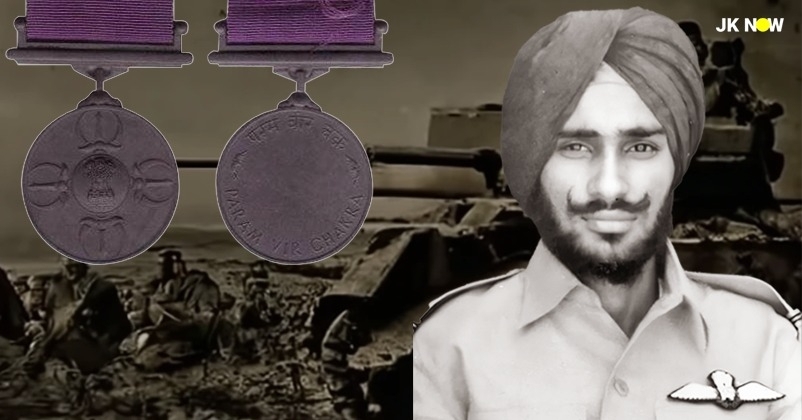
On the birth anniversary of Flying Officer Nirmal Jit Singh Sekhon, the nation remembers one of India’s bravest air warriors. The only Indian Air Force officer to be awarded the Param Vir Chakra, he displayed unmatched courage during the 1971 India-Pakistan War while defending the Srinagar Air Base against Pakistani air attacks, making the supreme sacrifice in the line of duty.
Flying Officer Nirmal Jit Singh Sekhon was born on 17 July 1945 in Issewal village of Ludhiana district in Punjab to Trilok Singh Sekhon and Harbans Kaur. Inspired by his father, who served in the Indian Air Force and later retired as an Honorary Flight Lieutenant, Sekhon chose the path of military service and went on to etch his name in India’s history with his extraordinary bravery.
India-Pakistan War 1971:
On 14 December 1971, Srinagar airfield was bombed and strafed by six Pakistani Sabre aircraft. Inspite of immense risk to life for attempting to take off during the air attack, Flying Officer Nirmal Jit Singh Sekhon of 18 Squadron, who was a Gnat pilot, took off and immediately engaged a pair of the attacking Sabres. He secured hits on one aircraft and damaged another. By this time four more Pak Sabre aircraft came to the rescue of their aircraft, which was locked in an air-combat with Indian Gnat. In the ensuing combat, his aircraft was shot down by one of the Sabres. The sublime heroism, supreme gallantry and determination displayed by Flying Officer Sekhon in the face of certain death set new heights in Air Force traditions.
On 14 December 1971, Srinagar airfield was bombed and strafed by six Pakistani Sabre aircraft. Inspite of immense risk to life for attempting to take off during the air attack, Flying Officer Nirmal Jit Singh Sekhon of 18 Squadron, who was a Gnat pilot, took off and immediately engaged a pair of the attacking Sabres. He secured hits on one aircraft and damaged another. By this time four more Pak Sabre aircraft came to the rescue of their aircraft, which was locked in an air-combat with Indian Gnat. In the ensuing combat, his aircraft was shot down by one of the Sabres. The sublime heroism, supreme gallantry and determination displayed by Flying Officer Sekhon in the face of certain death set new heights in Air Force traditions.
His citation reads:
Flying Officer Nirmal Jit Singh Sekhon was a pilot of a Folland Gnat detachment based at Srinagar for the air defence of the valley against Pakistani air attacks. In accordance with the international agreement dating back to 1948, no air defence aircraft were based at Srinagar, until the outbreak of hostilities with Pakistan. Flying Officer Sekhon was, therefore, unfamiliar with the terrain and was not acclimatised to the altitude of Srinagar, especially with the bitter cold and biting winds of the Kashmir winter. Nevertheless, from the outset of the war, he and his colleagues fought successive waves of intruding Pakistani aircraft with valour and determination, maintaining the high reputation of the Folland Gnat aircraft.
On 14 December 1971, Srinagar Airfield was attacked by a wave of six enemy Sabre aircraft. Flying Officer Sekhon was on readiness duty at the time. However, he could not take off at once because of the clouds of dust raised by another aircraft which had just taken off. By the time the runway was fit for take-off, no fewer than six enemy aircraft were overhead, and strafing of the airfield was in progress. Nevertheless, in spite of the mortal danger of attempting to take off during an attack, and in spite of the odds against him. Flying Officer Sekhon took off and immediately engaged a pair of the attacking Sabres. In the fight that followed, at tree top height, he all but held his own, but was eventually overcome by sheer weight of numbers. His aircraft crashed and he was killed. In thus, sacrificing himself for the defence of Srinagar, Flying Officer Sekhon achieved his object, for the enemy aircraft fled from the scene of the battle without pressing home their attack against the town and the airfield. The sublime heroism, supreme gallantry, flying skill and determination, above and beyond the call of duty, displayed by Flying Officer Sekhon in the face of certain death, set new heights to Air Force traditions.