“You Abandoned Your Own Soldiers”: Fazlur Rehman targets Pakistan Army over the Kargil War
Total Views |


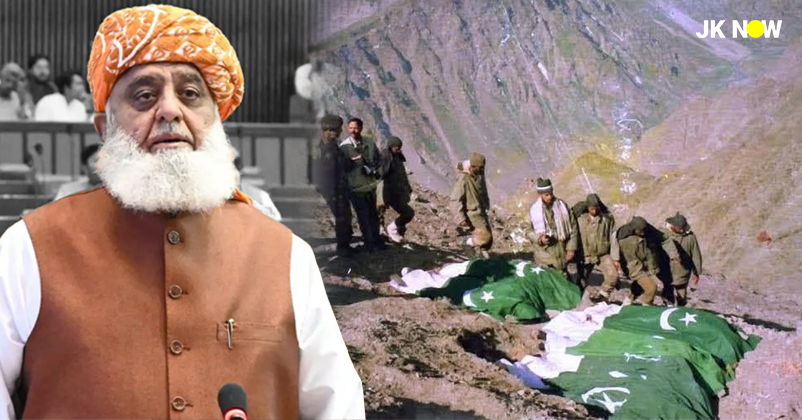
Pakistan’s senior politician and Jamiat Ulema-e-Islam (JUI-F) chief, Maulana Fazlur Rehman, launched a sharp attack on the Pakistan Army, accusing it of abandoning its own soldiers during the 1999 Kargil War and refusing to acknowledge those who were killed.
Jamiat Ulama-i-Hind के प्रमुख मौलाना Fazal ur Rehman ने फिर #PakistanArmy की जमकर धज्जियाँ उड़ाई है. #KargilWar का जिक्र करते हुए फजलुर ने कहा कि आज तक क्या #PakistanArmyने बताया कि #KargilWar में हमारे कितने जवान मारे गए थे? pic.twitter.com/AEIqf7hLJE
— Jammu-Kashmir Now (@JammuKashmirNow) July 20, 2026
Addressing a public gathering, Fazlur Rehman said Pakistan’s military neither accepted responsibility for hundreds of soldiers killed in Kargil nor took back their bodies. He remarked that the bodies of Pakistani soldiers were left behind and were later buried by the Indian Army according to Islamic traditions.
In a taunting tone, he questioned the Army’s treatment of its own personnel, asking how many soldiers were killed in Kargil and how many bodies were actually brought back. He said that Pakistan’s military leadership abandoned its fallen soldiers and later tried to hide the truth from the public.
Maulana Fazlur Rehman accused the Pakistani Army of interfering in politics and hiding corruption in the country. He said the biggest insult to Pakistan’s killed soldiers has been done by the military leadership itself.
Fazlur Rehman further claimed that Pakistan had portrayed the Kargil fighters as “Kashmiri terrorists” instead of regular Pakistani soldiers to avoid international embarrassment. He said the controversy over the handling of soldiers bodies remains one of the most uncomfortable chapters in Pakistan’s military history.
It is pertinent to mention that in 1999, Pakistani troops, under General Pervez Musharraf’s plan, secretly occupied the Kargil heights in disguise. However, they failed against the bravery of the Indian Army. When India presented evidence before the international community, Pakistan attempted to avoid embarrassment by falsely claiming that it was not its soldiers, but 'Kashmiri terrorists’ fighting in Kargil. The truth, however, eventually exposed the deception.