'Unprecedented era of peace, progress, prosperity' in J&K post abrogation of Article 370: Centre to SC, Constitution bench to hear pleas challenging the revocation of Art 370 from August 2,2023
| 11-Jul-2023 |
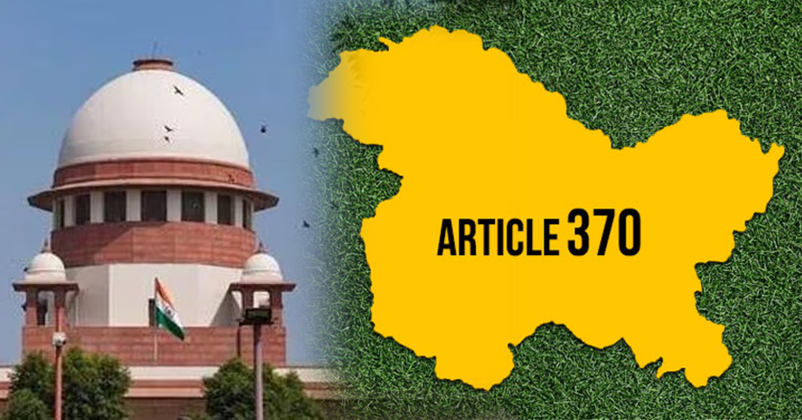
The Central government on Monday defended its decision to abrogate Article 370 from Jammu and Kashmir saying post the changes, street violence, which was engineered and orchestrated by terrorists and secessionist networks has now become thing of past.
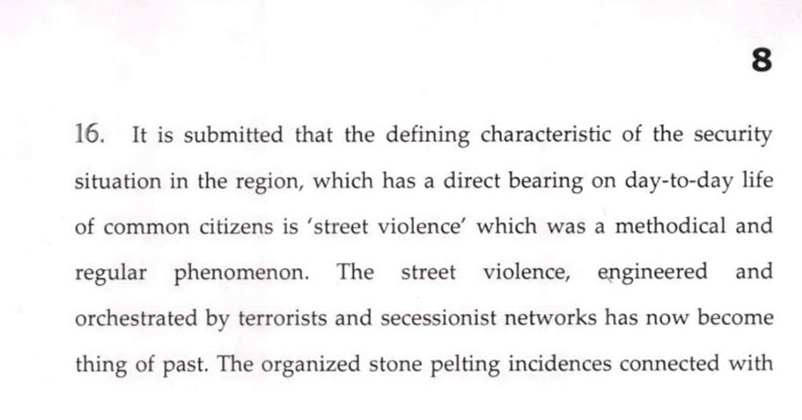
Since 2019, when Article 370 was abrogated, the entire region has witnessed an "unprecedented era of peace, progress and prosperity," the Centre said. After the abrogation of Article 370 from Jammu and Kashmir, life has returned to normalcy there after three decades of turmoil, the Centre told the Supreme Court.
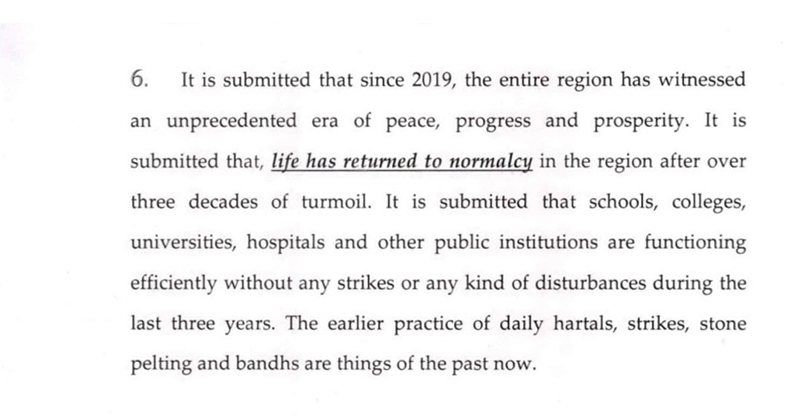
Schools, colleges and universities are functioning without any strikes during the last three years, it added. "The earlier practice of strikes and bandhs is a thing of the past. Participation in sporting activities is phenomenal having reached 60 lakhs in 2022-23. These facts clearly prove the positive impact of the constitutional changes effected in 2019," Centre said in its affidavit.
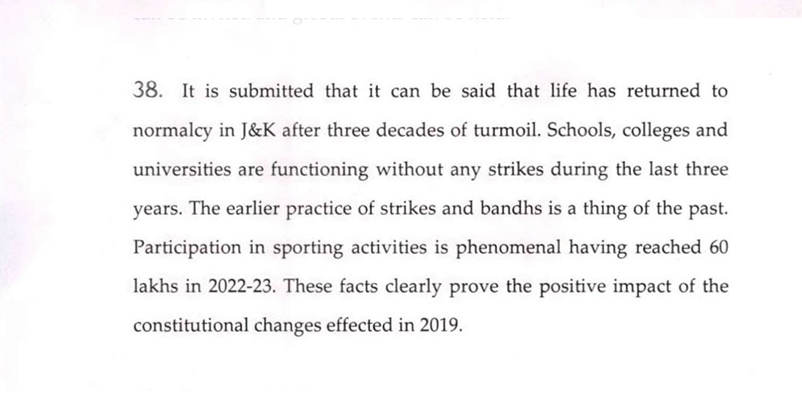
Organised stone pelting incidences connected with terrorism-separatist agenda, which were as high as 1767 in 2018 has come down to zero in 2023 till date, Centre stated in its fresh affidavit before the apex court. 2018 saw 52 incidences of organised Bandh/ Hartal, which has come down to zero in the year 2023 to date, it added.
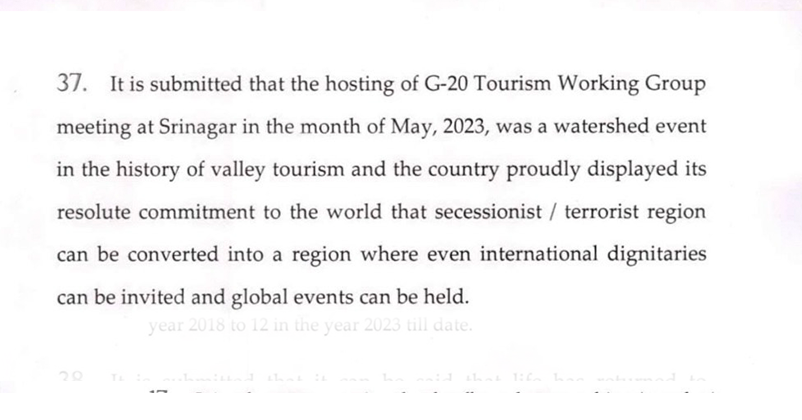
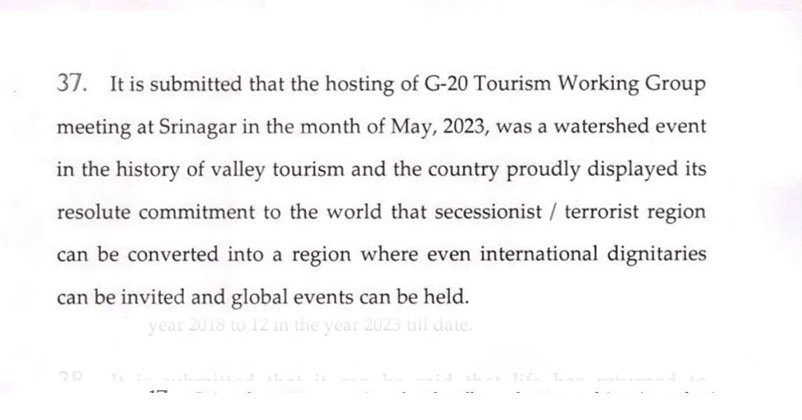
Hosting of the G-20 Tourism Working Group meeting at Srinagar in May 2023 was a watershed event in the history of valley tourism and the country "proudly displayed" its resolute commitment to the world that "secessionist/terrorist region can be converted into a region where even international dignitaries can be invited and global events can be held", Centre said.
The affidavit of the Centre was filed on a batch of petitions challenging the abrogation of Article 370 and bifurcation of the erstwhile state of Jammu and Kashmir into two Union territories.
A five-judge Constitution bench hear the case from 2nd August, 2023.
In its affidavit, the Centre said that the UTs of Jammu & Kashmir and Ladakh have witnessed profound ameliorative, affirmative and progressive changes in the last four years encompassing its entire governance - including the developmental activities, public administration and security matters which has positively impacted every resident irrespective of caste, creed or religion.
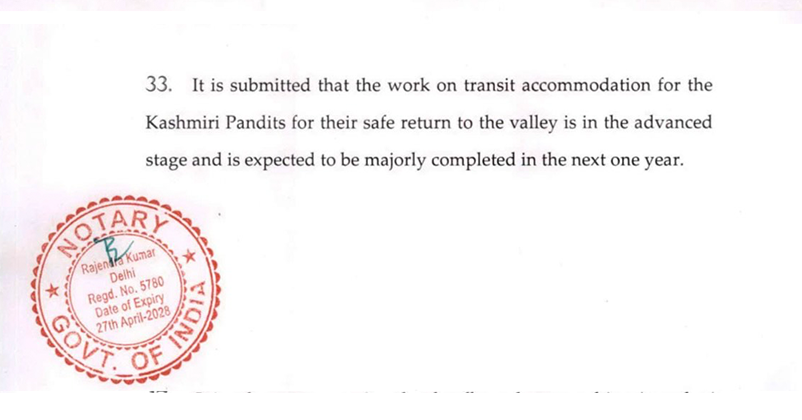
It also stated that work on transit accommodation for the Kashmiri Pandits for their safe return to the valley is in the advanced stage and is expected to be majorly completed in the next year.
After the abrogation of Article 370, all the provisions of the Constitution of India, all Central laws are applicable to the Union territories of Jammu & Kashmir and Ladakh, said the Centre.
The citizens were earlier deprived of the benefits of important central legislations, the Centre in its affidavit added. After the constitutional changes, democratically made, major steps were taken to strengthen grassroots democracy, said Centre.
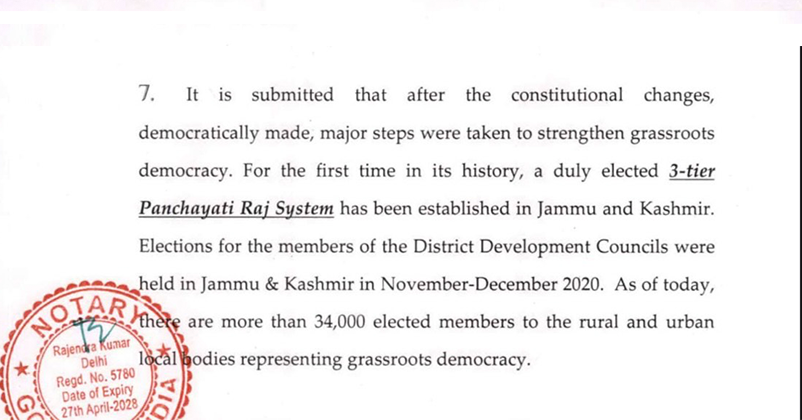
"For the first time in its history, a duly elected 3-tier Panchayati Raj System has been established in J-K. Elections for the members of the District Development Councils were held in J&K in November-December 2020. As of today, there are more than 34,000 elected members to the rural and urban local bodies representing grassroots democracy," it added.
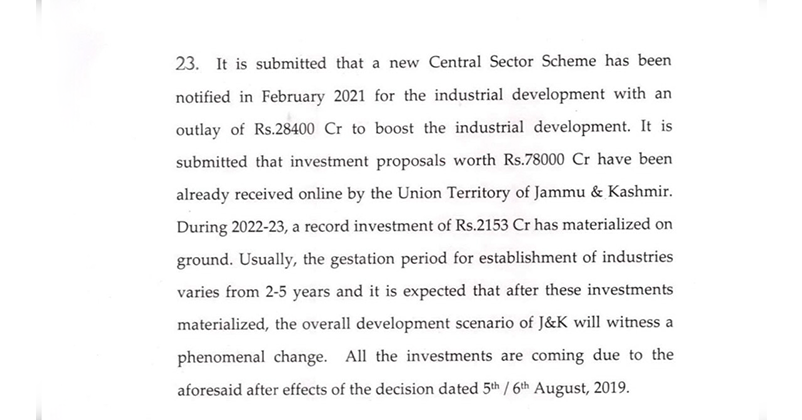
The affidavit further submitted that a new Central Sector Scheme has been notified in February 2021 for industrial development with an outlay of Rs. 28400 crores to boost industrial development; investment proposals worth Rs 78,000 crores have been already received online by the UT of Jammu & Kashmir, affidavit stated.
Post abrogation, with bandhs and street violence having "almost become a thing of the past", accountability in the administration has vastly improved with a record number of public works having been executed that are verifiable by way of GPS-connected time and date-stamped videos and still photographs taken before and after execution, it said.
The affidavit added that ensuring safety and improving the quality of life for people in Jammu & Kashmir is a top priority of the government and the government has adopted a policy of zero tolerance against terrorism.
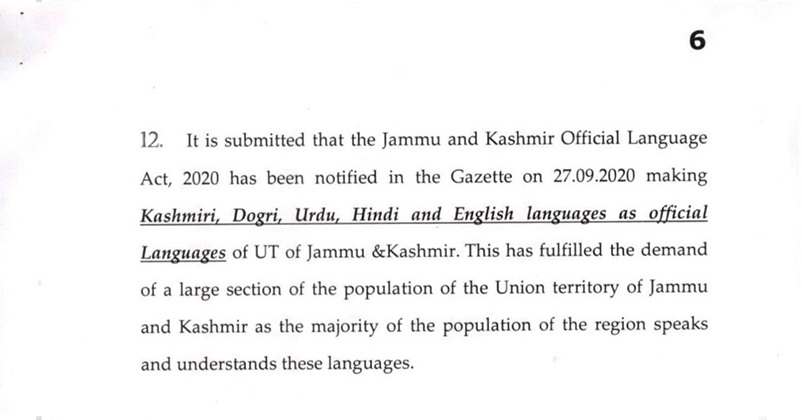
Post abrogation, local languages' like Kashmiri, Dogri, Urdu and Hindi have also been added as official languages, fulfilling the demand of the people, the affidavit highlighted.
A five-judge Constitution bench of Chief Justice of India DY Chandrachud and Justices Sanjay Kishan Kaul, Sanjiv Khanna, BR Gavai, and Surya Kant will hear the case.
On August 5 2019, the Central government announced its decision to revoke the special status of Jammu and Kashmir granted under Article 370 and split the region into two Union territories.
A five-judge Constitution bench in March 2020 had declined to refer to a larger 7-judge bench a batch of petitions challenging the Constitutional validity of the Centre's decision to abrogate provisions of Article 370 on August 5, saying there were no reasons to refer the matter to a larger bench.
A number of petitions have been filed in the top court including those of private individuals, lawyers, activists and politicians and political parties challenging the Jammu and Kashmir Reorganisation Act, 2019, which splits Jammu and Kashmir into two Union Territories -- Jammu and Kashmir, and Ladakh.