Unforgotten Agony of 13 December: When Terror Struck India’s Parliament
13 Dec 2025 12:17:32
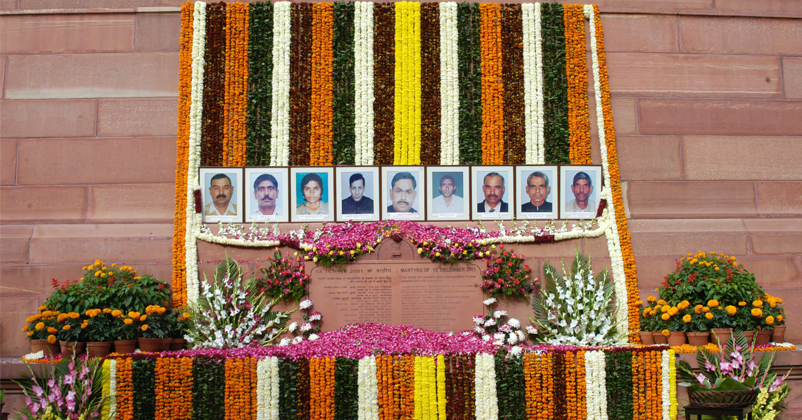
The attack on the Indian Parliament on 13 December, 2001, stands as a watershed moment in the nation’s history. Five heavily armed terrorists stormed the Parliament complex in New Delhi, resulting in a fierce gun battle with security forces. The attackers, who were members of the Pakistan-based terrorist group Lashkar-e-Taiba (LeT) and Jaish-e-Mohammed (JeM), managed to breach the security and enter the premises.
The assailants aimed to target the heart of India's democratic institution, symbolizing a direct assault on the country's sovereignty.
The attack began around 11:30 am when the attackers, armed with AK-47 rifles, grenades, and explosives, drove an Ambassador car with fake Home Ministry and Parliament stickers through the gates of the Parliament House complex.
They started firing indiscriminately, killing security personnel and civilians in the process. The Indian security forces immediately responded, engaging in a fierce gun battle with the terrorists.
During the attack, the terrorists managed to enter the Parliament building itself, leading to a lockdown and evacuation of all Members of Parliament (MPs) present. The security forces, including the Delhi Police, Central Reserve Police Force (CRPF), and the National Security Guard (NSG), launched a counter-operation to neutralize the attackers.
The intense gunfight lasted for about 90 minutes, during which all five terrorists were killed. However, the attack resulted in the deaths of 14 people, including five terrorists, six Delhi Police personnel, two Parliament Security Service personnel, and a gardener. Several others were injured in the attack.
Extensive investigations after the attack revealed four names in connection with the case: Afzal Guru, (a former J&K Liberation Front terrorist ), his cousin Shaukat Hussain, Shaukat’s wife Afsan Guru and SAR Geelani.
The court acquitted Afsan and sentenced Geelani, Shaukat and Afzal to death. Geelani was later acquitted for 'need of evidence’ and Shaukat was given 10 years of imprisonment. On 9 February, 2013, Afzal Guru was hanged to death in Delhi’s Tihar jail.